Amid all the hype surrounding MCPs like Cursor and Copilot, there hasn’t been much talk about how dramatically testing has changed. But AI agents have indeed transformed developer workflows just as much as they've impacted coding.
From test generation, maintenance, and issue reports to automated test environments, self-directed end-to-end tests, and pull request reviews, AI testing has reshaped both how engineers test code and how they ship new features.
In this article, we'll discuss how AI tests with QA.tech have changed specific developer workflows, as well as the broader trends that have emerged as a result.
Post AI Testing: What Do Developer Workflows Look Like Now?
It’s impossible to cover every workflow because they vary widely, depending on a team, stack, and product maturity. However, lean startups and mid-sized teams generally share a set of common development processes.
Here's how AI-generated tests have fundamentally changed each of them.
Implementing a New Feature
With AI testing, teams can now offload much of their work related to generating, maintaining, and running tests for new features to an agent and focus on writing code instead.
Implementing a new feature typically spans multiple stages of the SDLC, from analyzing acceptance criteria to testing code. In shift-left dev, which often includes early testing, it may look like this: analyze A/C → technical design → create test cases→ write and test code → deploy→ maintain.
In small teams, devs are involved in creating test cases (sometimes from the A/C) while also writing code. It often causes confirmation bias because they tend to test paths that are expected to work. These tests usually have low coverage and many missing edge cases, which leads to unexpected bugs showing up in prod. Even when QA engineers are involved, creating comprehensive test suites takes days.
AI testing has changed this dynamic entirely, and what used to be done in days has now been reduced to mere minutes. An AI agent reviews the uploaded A/C and technical design to generate positive, negative, and edge cases. Tools like QA.tech let you add these generated tests to your project's dashboard.
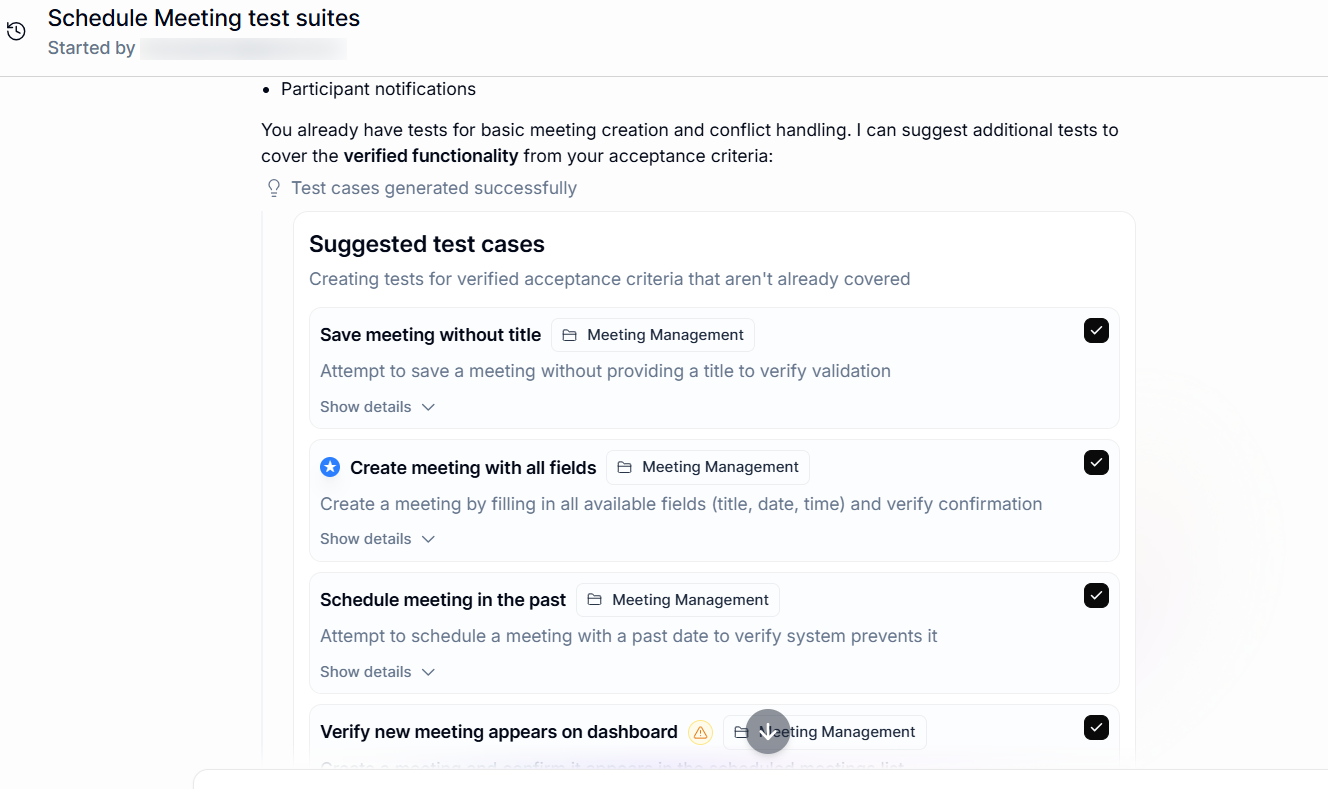
With the new workflow reduced to analyze A/C → technical design → write and test code → deploy → maintain, devs can now focus on actually building new features, and teams can enjoy the full benefits of shift-left development without back-breaking effort.
Updating a Feature
Typically, when updating a feature, devs must re-examine existing behavior and required changes. A common dev flow is to analyze the A/C → update existing test cases → write and test code → deploy. But combing through dozens of existing tests, editing them, and adding new ones before getting to the actual feature update is a serious pain.
Agentic testing massively reduces this problem because the AI agent reviews the A/C and identifies testing gaps. Then, it creates new tests to fill those gaps and proposes updates to affected test cases.
E2E Testing
AI-generated tests have transformed E2E testing from an expensive and slow process to an affordable one that can be set up and maintained in minutes.
Before AI agents, E2E testing used to be notoriously costly and brittle. This is because it checked full user journeys to confirm that they can complete actions. As a result, companies either relied heavily on manual testers or paid devs to create and maintain large, often flaky test suites.
But agentic testing has largely eliminated those issues. QA.tech analyzes your app’s UI to extract user flows and generate test scripts for them. Rather than relying on brittle selectors, the agent interacts with your app at a high semantic level, just like a real user. On top of it all, it automatically adapts test steps to UI changes, thereby eliminating the majority of ongoing maintenance and bottlenecks for devs and QA teams.
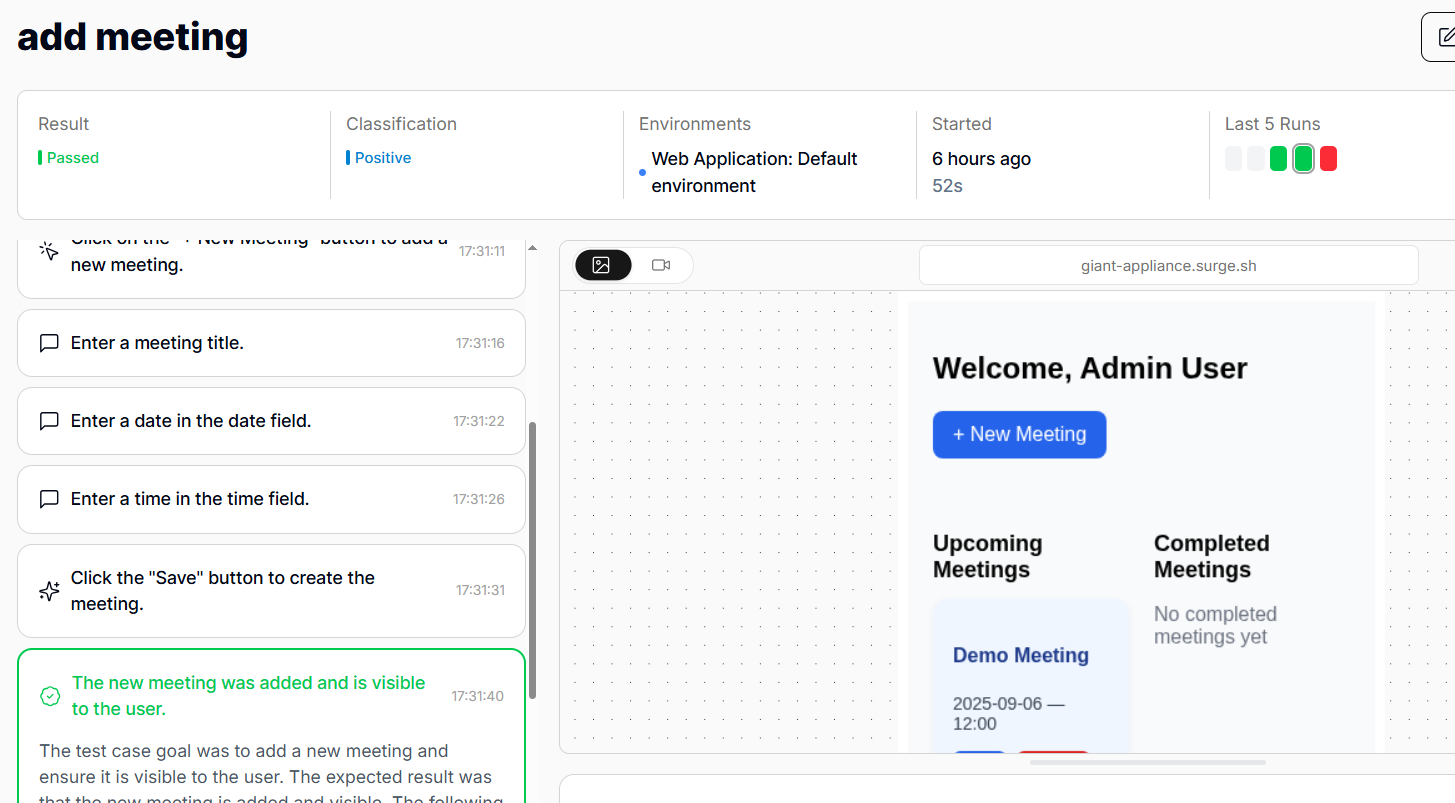
With agentic testing, a lean startup can easily run dozens of E2E tests on every deployment.
Regression Testing
Regression testing has been reduced to simply pushing new changes and allowing an autonomous agent to handle the rest.
In automated workflows, where these tests are triggered by a new push or build, devs still have to deal with maintenance bottlenecks. However, agentic tools like QA.tech take this a step further. They support CI/CD integrations, which means you can trigger tests in GitHub Actions to be run after every push, just like the traditional regression testing pipeline but without the maintenance burden. Most importantly, your team can run regression E2E tests continuously without spending extra time or money.
Tracking and Solving Issues
Tracking and fixing bugs used to take days and involve multiple team members. Now, thanks to AI testing, it has become a seamless and fast process where a single agent detects, reproduces, and reports bugs automatically.
In a traditional workflow, a QA dev discovers a bug and reproduces it while screen recording. A bug report and an issue ticket are sometimes created only days later. Then, a dev picks up the ticket, reproduces the bug again, and finally solves it.
With AI testing, however, documenting and prioritizing an issue takes minutes. Once an agent has encountered a failing bug, it generates the report and recording. If you've integrated Jira, Trello, or Linear, the agent automatically creates an open ticket. It can even message the team directly on Slack.
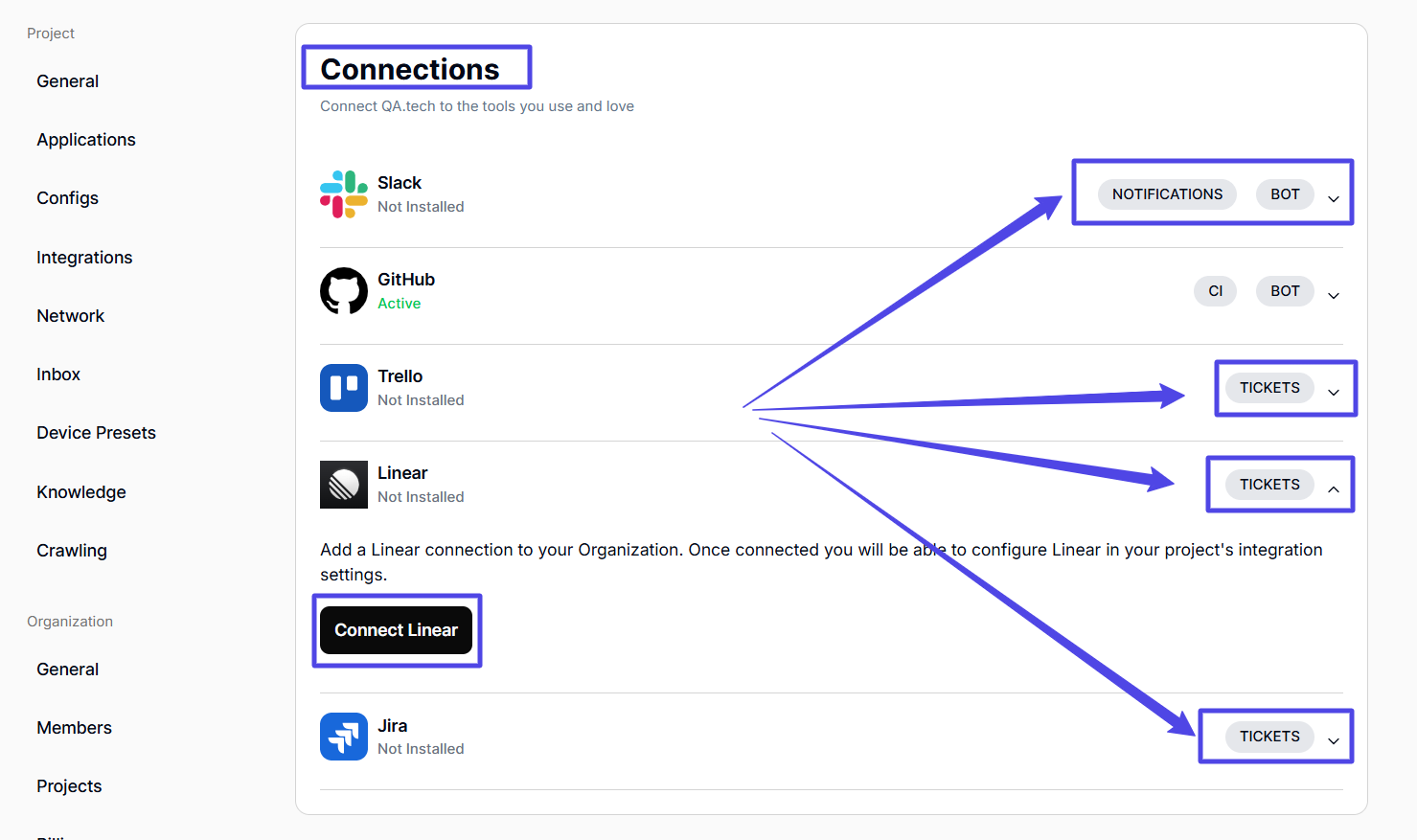
Instead of waiting days for QA to find and report bugs, devs can now run agentic tests, receive open and prioritized tickets, and start fixing them immediately.
Setting up and Configuring Test Environments, Data, and Sessions
QA teams typically do a lot of upfront and error-prone work in order to set up environments for tests. They create test data, spin up multiple browsers and OS combinations, provision databases, set up varying devices for UI tests, and manage test sessions.
But with AI testing, setting all this up manually and tearing down environments before and after test runs becomes unnecessary. Agents automatically manage environment configurations and dependencies according to what tests require.
In fact, configuring test environments has become as simple as choosing options. The agent takes over the setup and wipes the state after each run. And just like that, the problem of brittle test data and fixtures has been solved.
PR Review and Hotfix Releases
Devs know how painfully slow reviewing pull requests can be. PR testing with QA.tech shortens this process dramatically through agentic reviews, which are particularly handy during hotfix releases when every minute counts.
Once the agent has been added to a repository and mapped to an environment, the PR review workflow is reduced to a single step: making a PR. The agent automatically runs both exploratory and regression tests to ensure there are no breaking changes.
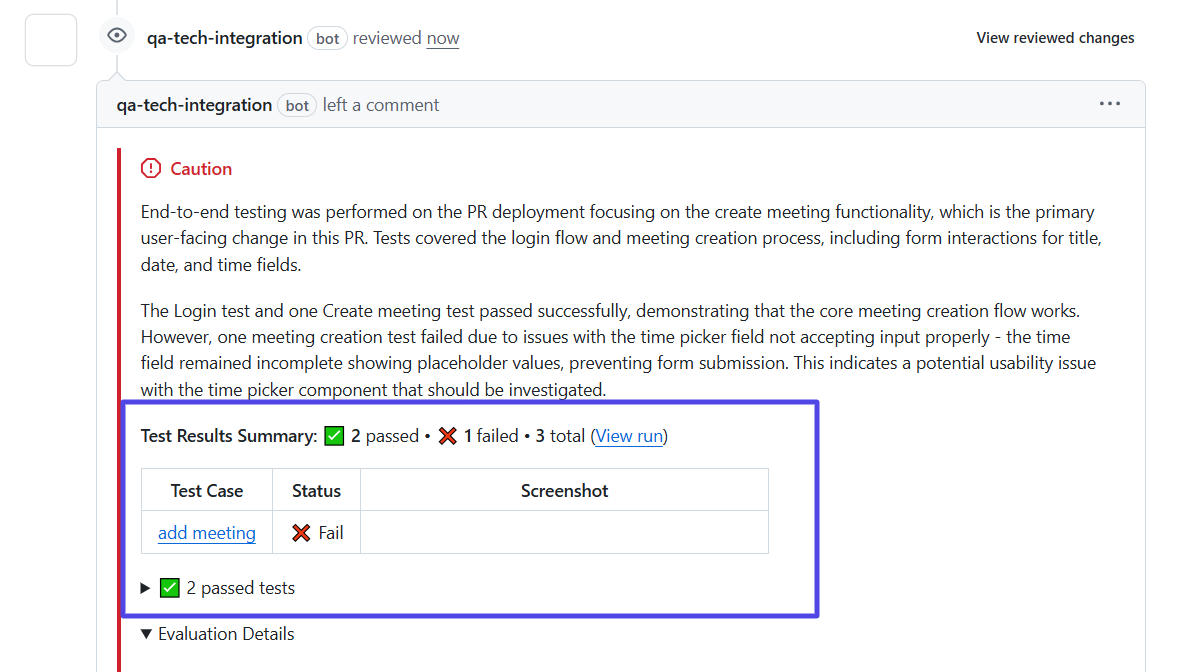
This way, you can stop most bugs from slipping through to users.
Trends in Developer Workflows Now
The practical changes to developer workflows reveal some common patterns:
- Focus on user experience: Since agentic AI navigates your app like a real user while recording tests in full, your team can now understand how users functionally experience your app. And it goes without saying that a seamless user experience is critical to an app’s success.
- Natural language for describing test goals and outcomes: Thanks to AI, the era of writing test assertions is gradually coming to an end. Now, all devs have to do is describe test goals and let the agent figure out how to run them. It’s also important to remember that different users will navigate your app differently, and observing the paths an agent takes to achieve user goals will provide insights into user experience.
- Automated issue tracking: The days of tediously writing bug reports and recording screens are over. Agents have taken over the issue tracking workflow, from detecting bugs and creating reports to opening tickets and messaging teams on Slack. They can also prioritize issues based on how critical they are to user experience.
- Increase in E2E testing: It is now a trend to do lots of E2E testing early in development and throughout the process. That’s because AI testing has made it easy and affordable to set up and maintain E2E tests over time. With QA.tech , you can add a project, and the agent will discover user flows from the app’s UI and generate test suites around each.
Rounding Up
AI testing has enabled shift-left teams to implement early testing easily and maintain it throughout a project’s development lifecycle. The autonomous nature of the agent allows dev teams to offload much of their testing burden and focus on building bug-free apps that users enjoy.
Step into the future of testing and allow your team to focus on the work they love to do. Check out QA.tech today.
Read how engineering leaders use QA.tech to hold release velocity without a growing QA backlog.